
HONEY FLOW
Set among the tree canopies of Warsaw’s Saska Kępa district, this 110-square-metre apartment occupies the rooftop extension of a pre-war residential building. Designed by Studio Onu for a couple of historians, Honey Flow is conceived as a nuanced study in eclecticism - one rooted less in stylistic quotation than in material intuition, spatial softness and carefully constructed contrast.
From the outset, eclecticism was understood not as accumulation but as composition. Elements from different periods and visual languages are brought together through shared qualities: rounded geometries, tactile surfaces and a warm, honeyed palette that flows consistently through the interior. This chromatic continuity acts almost like a filter, lending the apartment a quiet sepia undertone that softens transitions between spaces and eras.
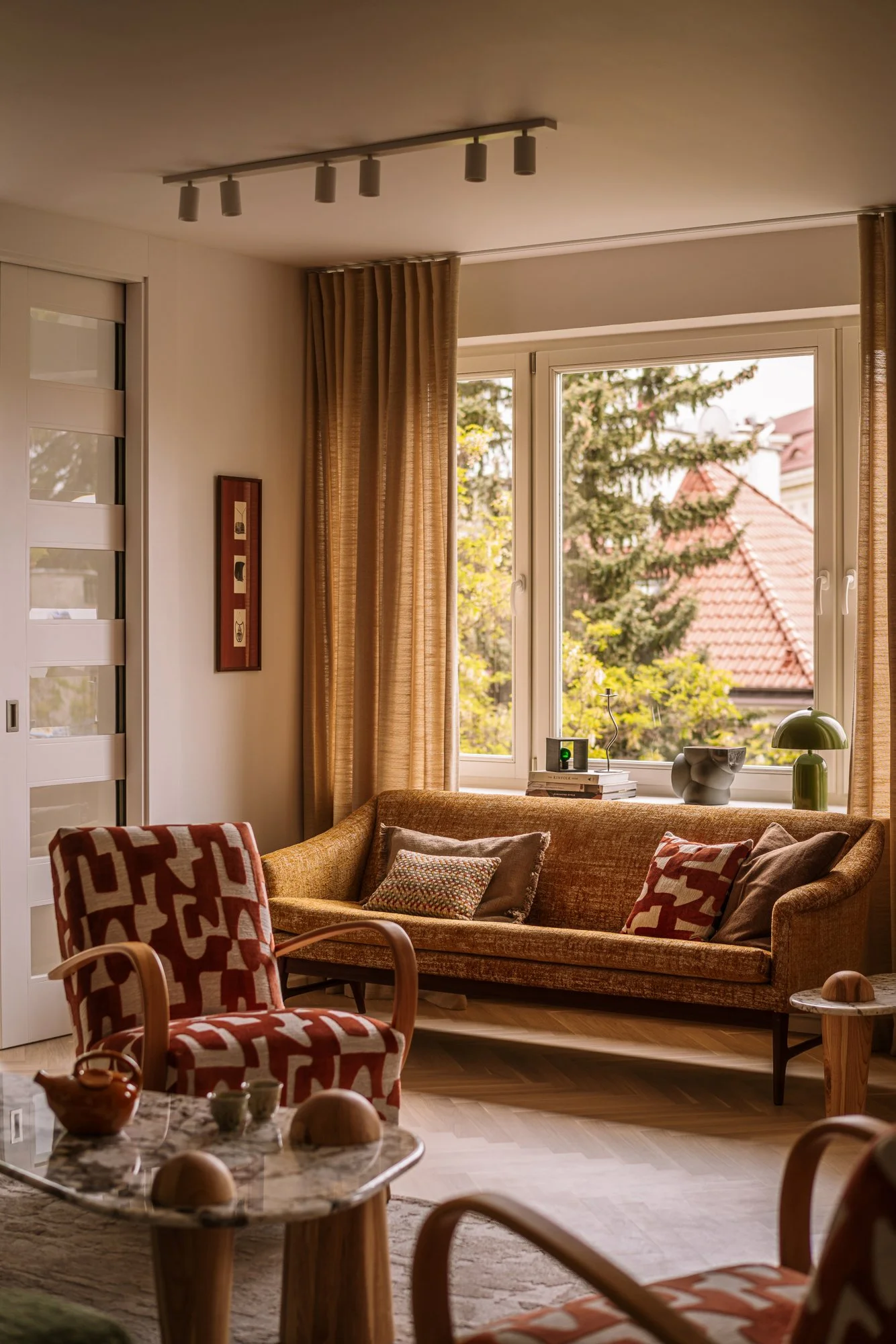
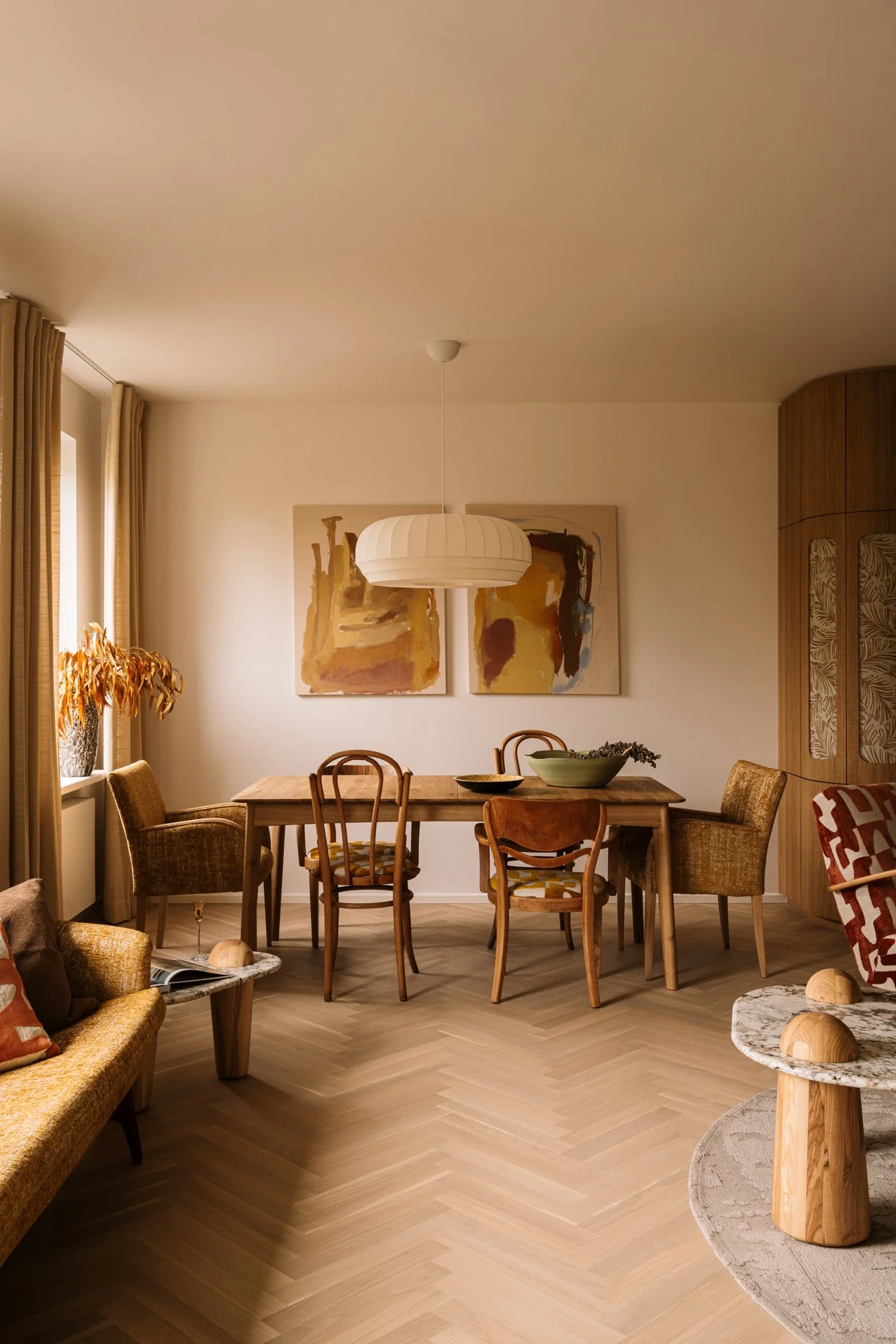
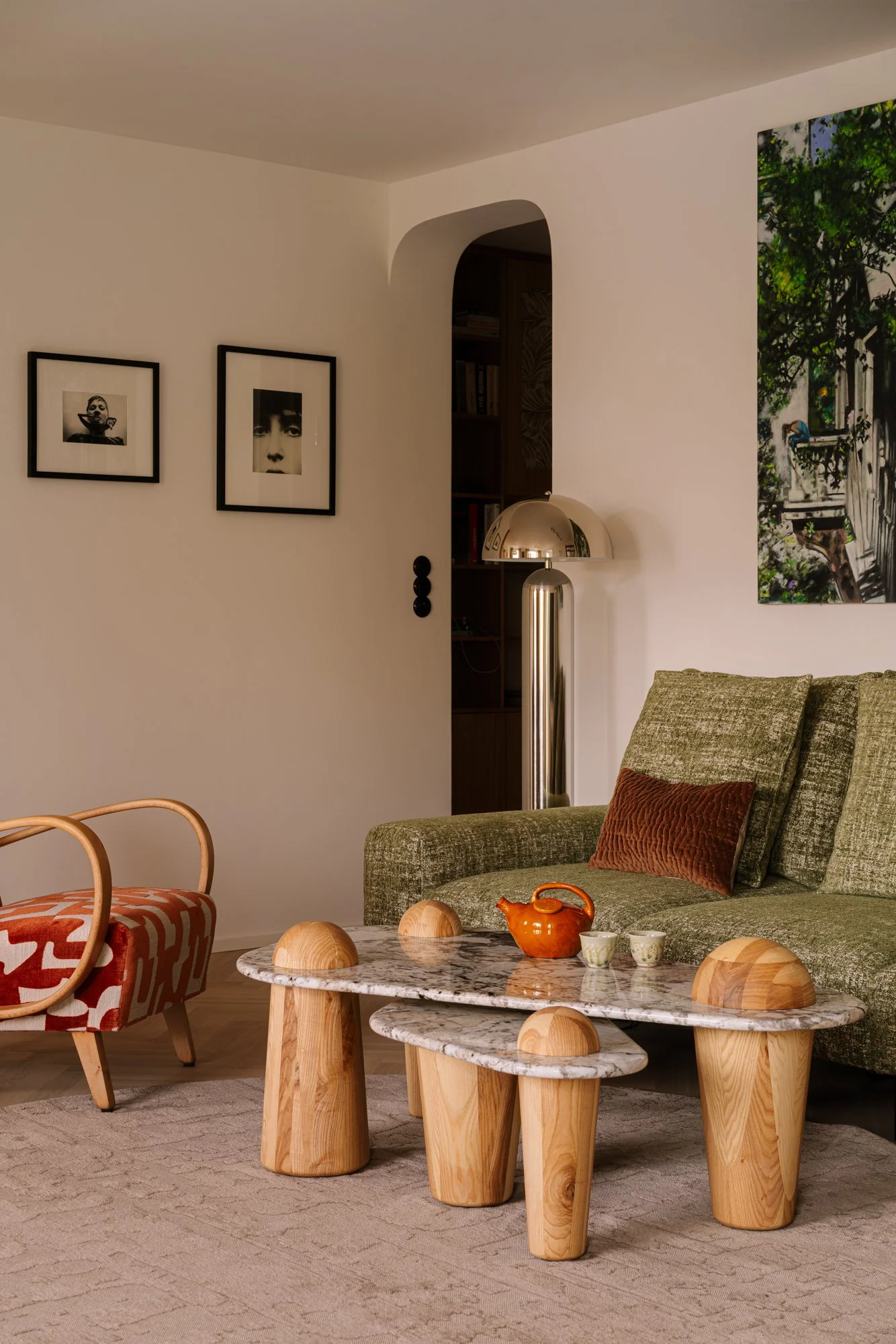
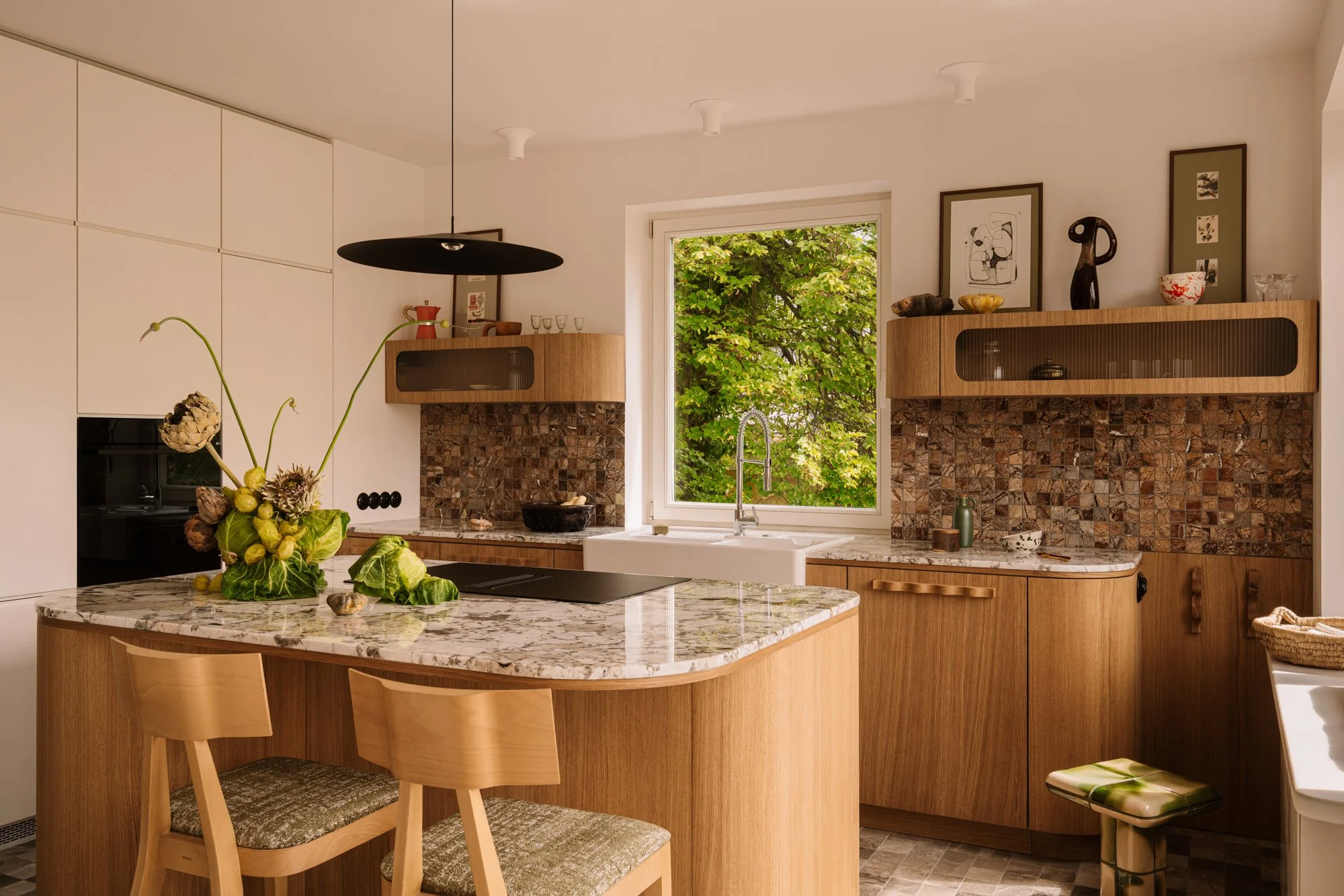
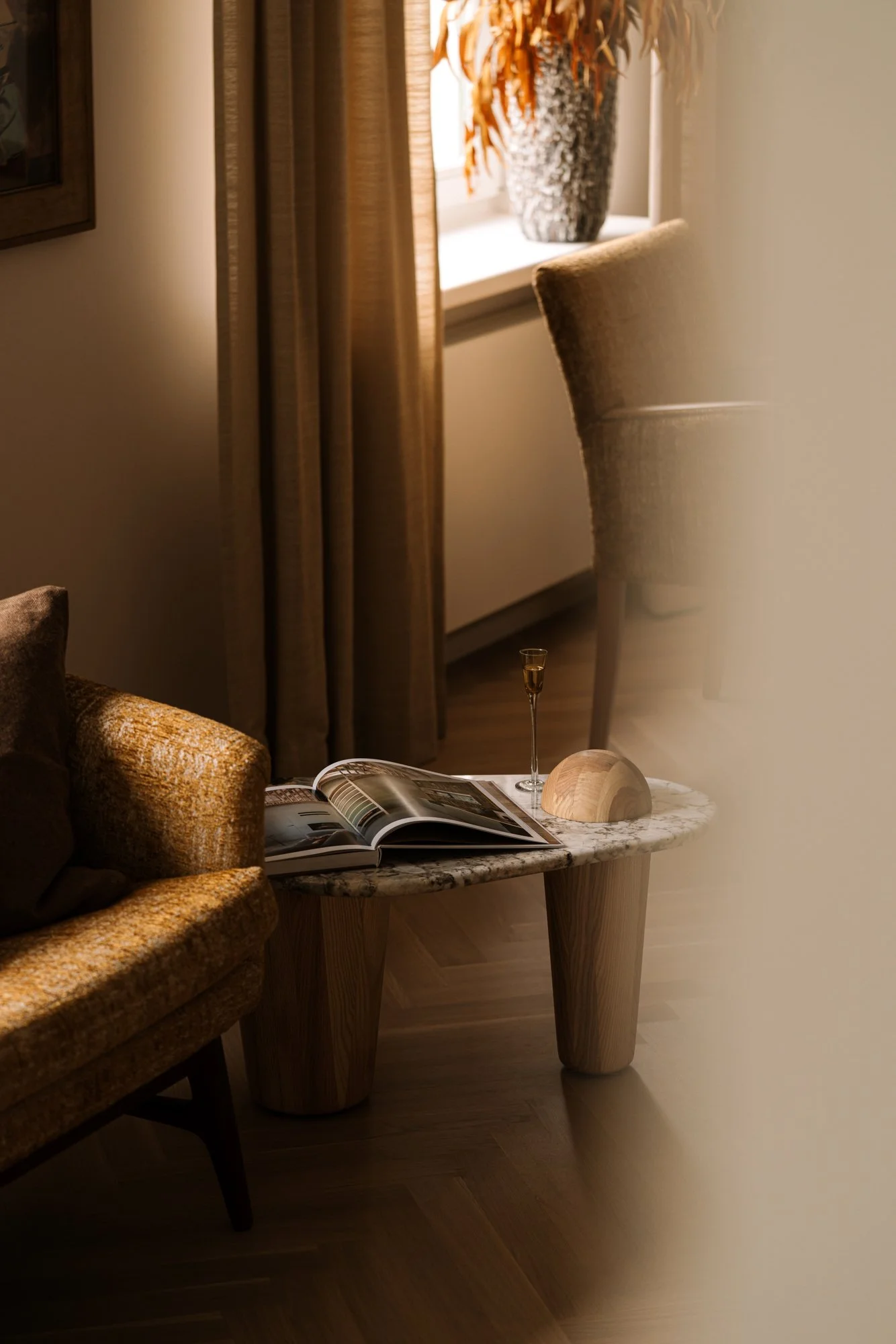
Curved forms serve as the project’s primary connective tissue. They appear in custom furniture, in joinery details, and in architectural interventions that temper the apartment’s existing structure. Exposed ceiling beams - originally blunt and utilitarian - are reframed with arched profiles that dissolve their rigidity and recalibrate the scale of the interior. These gestures are restrained yet persistent, subtly shaping how the apartment is read and inhabited.
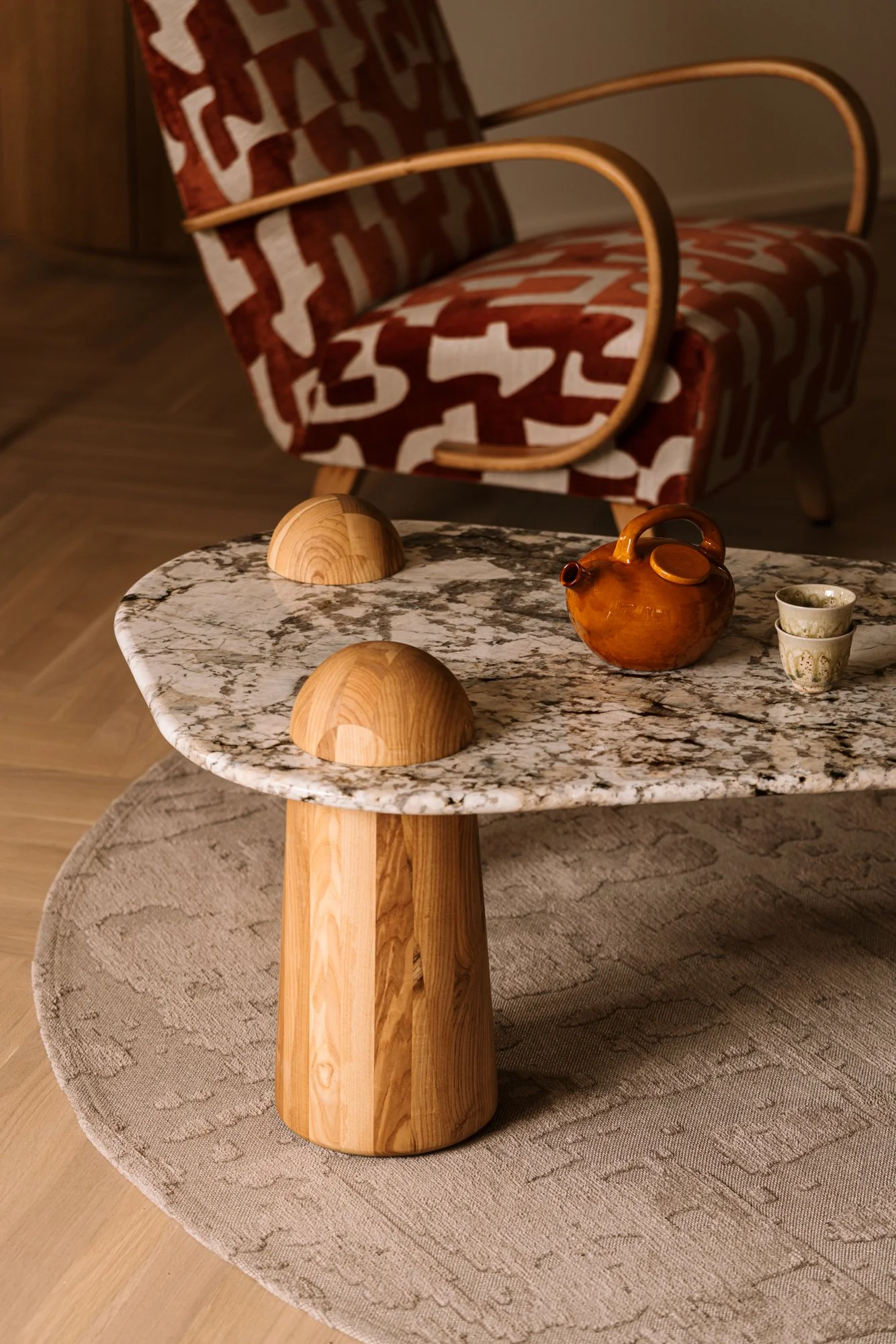
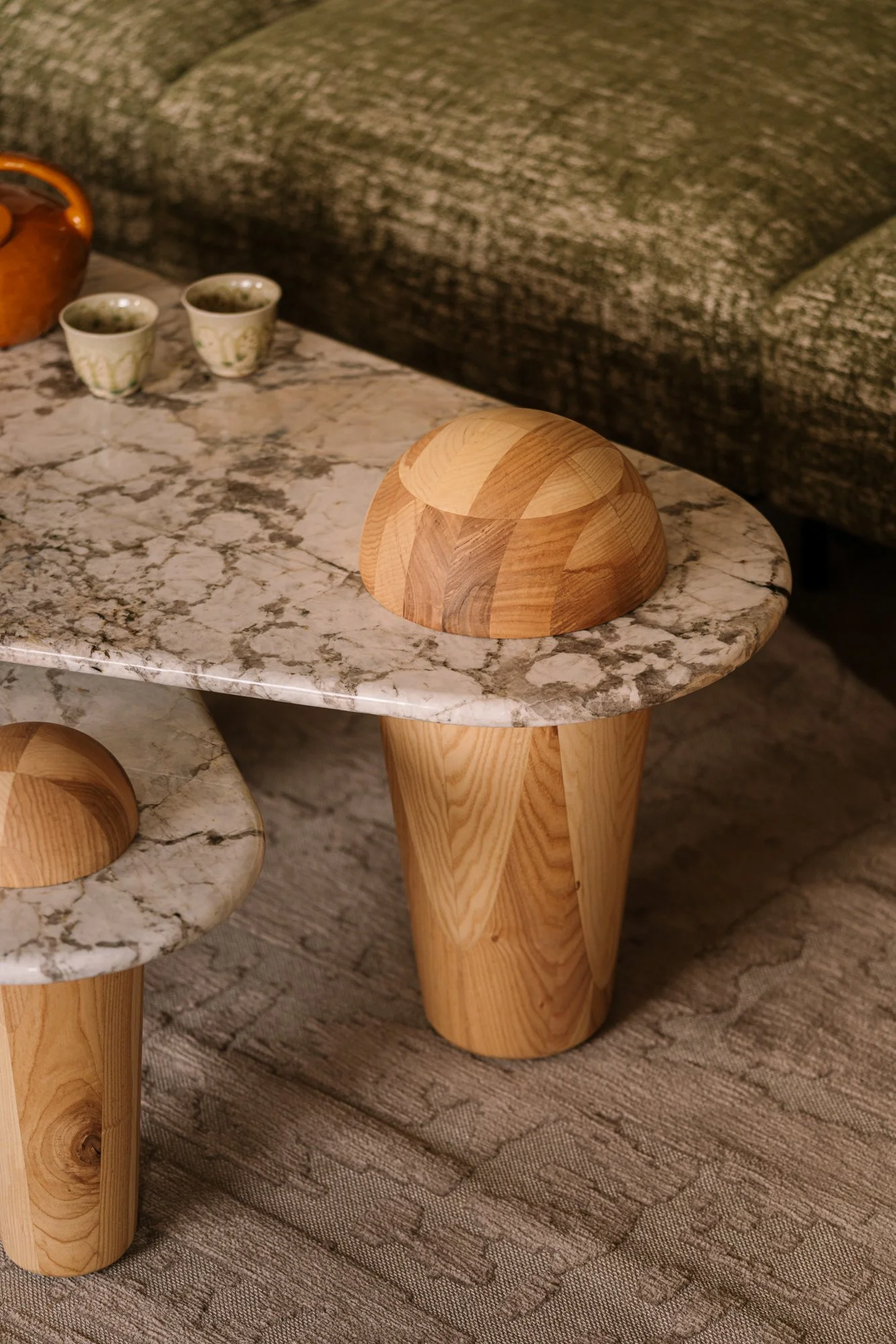
Material choices were guided by a clear hierarchy of values rather than conventional markers of finish. Despite working within a modest budget, Studio Onu chose to use natural stone throughout the apartment - accepting that this decision required materials of irregularity and visible imperfection. Granite worktops and marble mosaics, sourced in lower grades, carry tonal variation, uneven veining and small flaws. Rather than disguising these qualities, the architects embraced them as evidence of time, extraction and process. In contrast to the seamless repetition of industrial finishes, these surfaces introduce a sense of material honesty and depth.
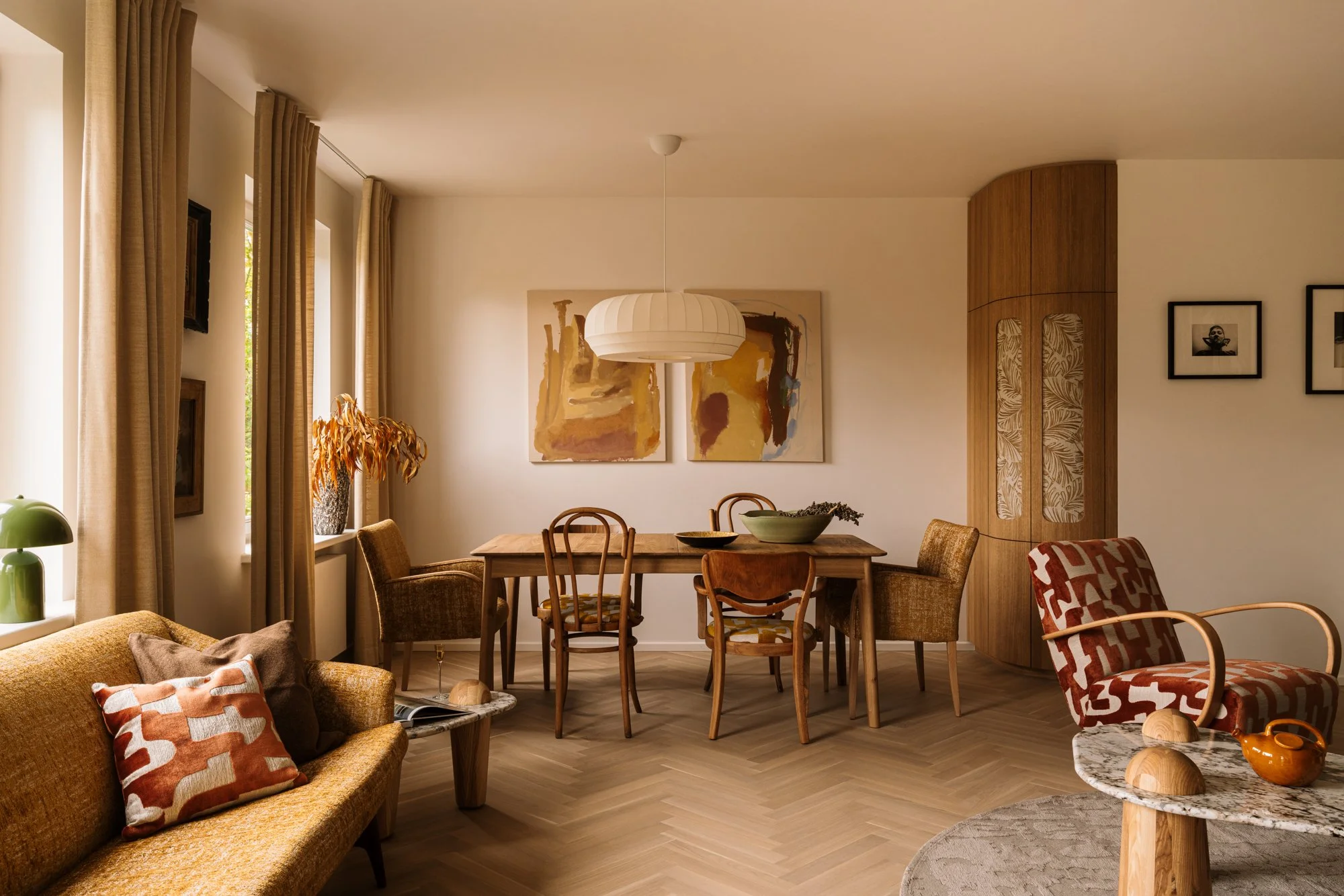
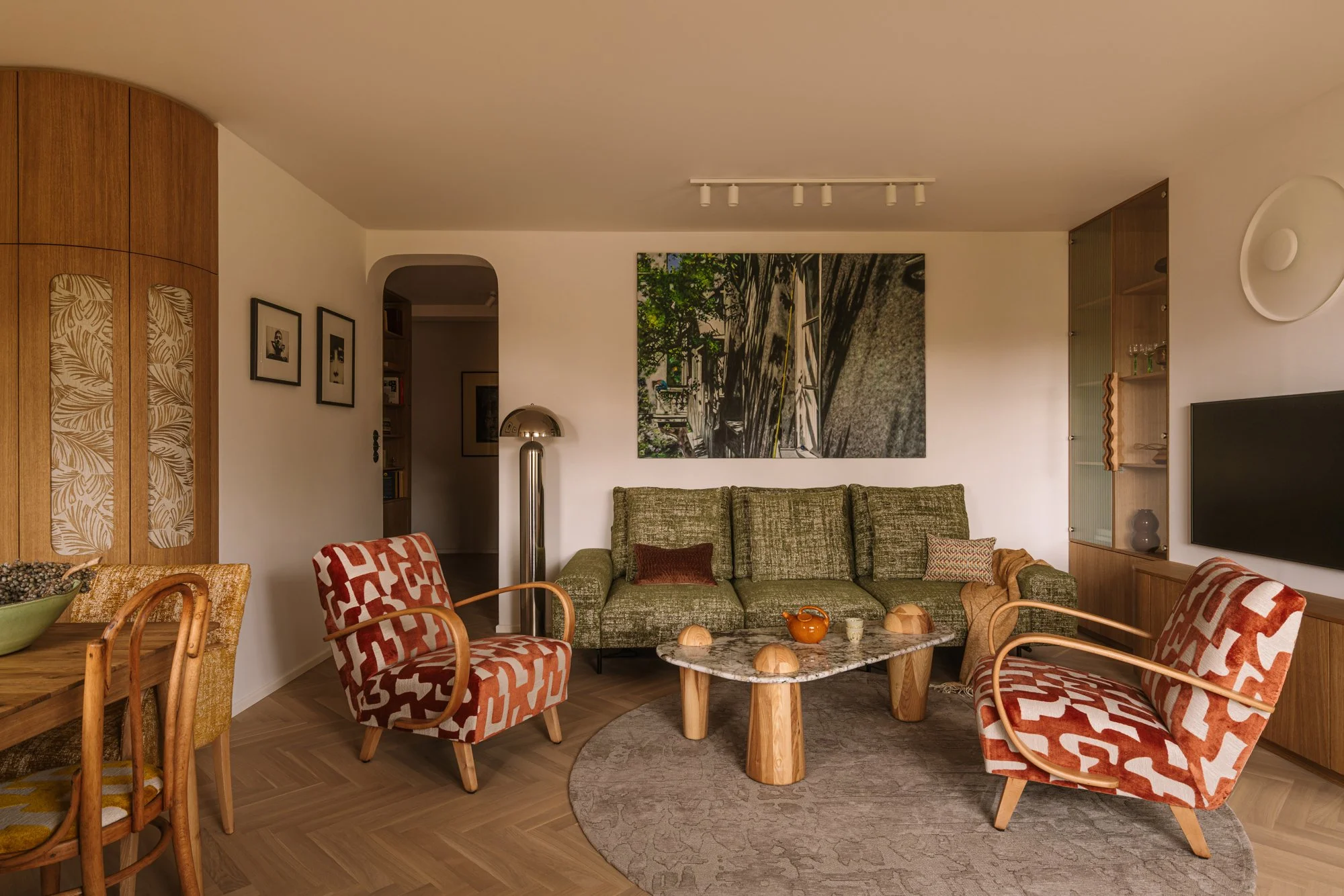
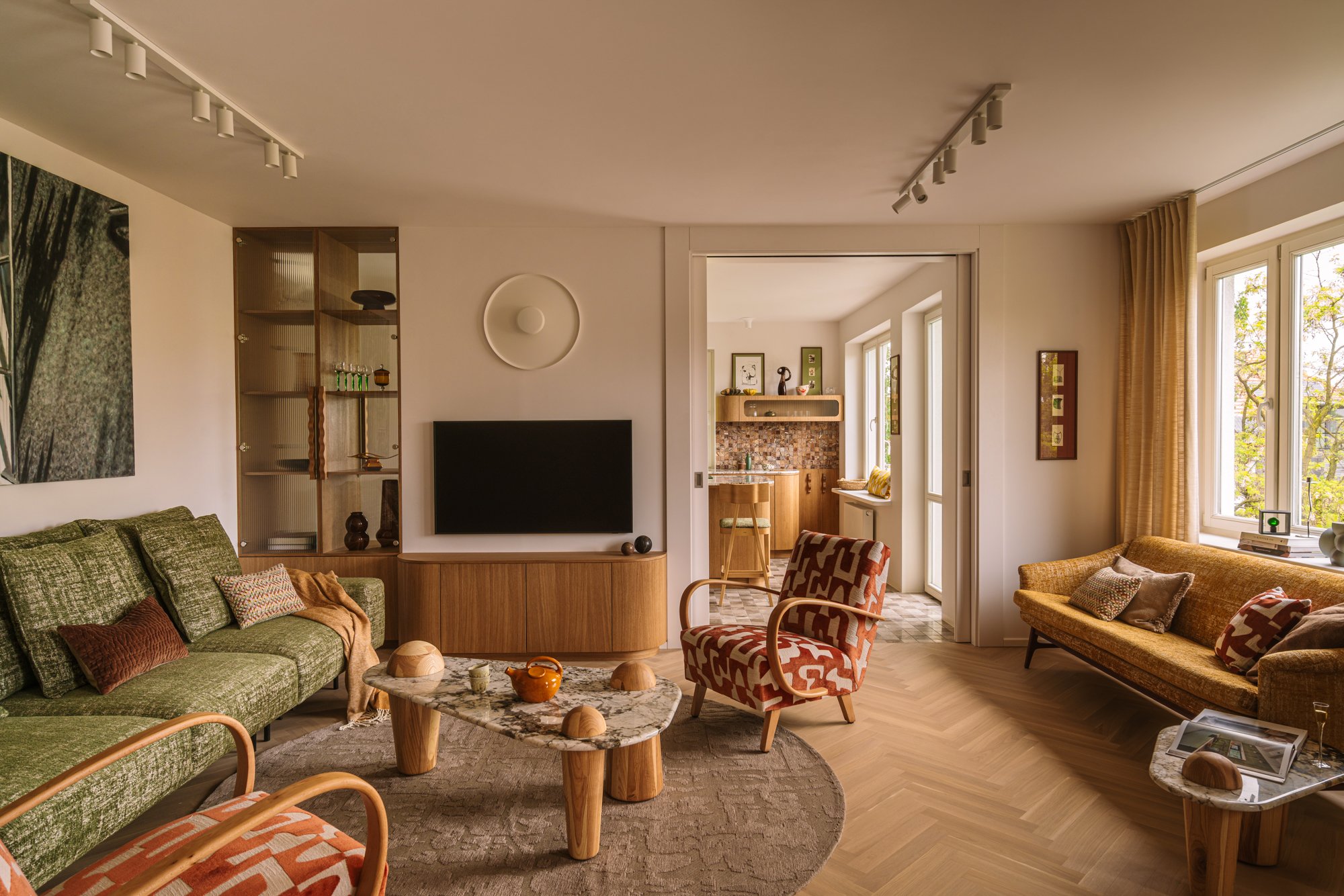
Much of the furniture was sourced second-hand and carefully restored, then reupholstered to suit the apartment’s tonal language. Mid-century seating pieces - such as classic Halabala armchairs and Thonet chairs - sit alongside bespoke elements, blurring distinctions between inherited objects and contemporary interventions. A custom desk, concealed behind sliding upholstered panels, shifts character depending on its state: closed, it reads as a softly glowing lantern; open, it reveals a workspace and craft station integrated into the domestic landscape.
The hearth is traditionally the centre of the home – the point around which all life rotates. We respected this tradition by placing the fireplace at the literal heart of the home building. The fireplace is framed by vistas from every room of the house emphasising this further, contrasting with the glimpses of the parkland beyond.
The primary materials were locally sourced. The pinewood used for the structure and furniture reflects those of the parkland, forming a continuity between the interior and exterior. Bricks were sourced from a local brickyard, their tone and materiality respecting the land and soil of the area. The green of the pines is reflected internally in the surface tones and glazed ceramic tiles found in the kitchen and the bathroom.
Kashubia is a region known for the skills of its craftspeople. These are celebrated and emphasised through detailing incorporated in the building. The metalwork shutters were created locally. The fine fretwork delicately filtering light into the interior space, providing protection from the elements. The patterning of the external façade was inspired by working with a local brickworker who understood the ornamentation, embroidery, music, entertainment, and wealth of textures and materiality of the region. The result is a modern expression and reinterpretation of traditional motifs.
These skills and artistry are also present in the furnishings of the Dom Las. Studio Onu designed the dining and coffee tables, drawing inspiration from the traditional turned-wood style furniture familiar to Kashubia to create a refined and modernised form. These also spoke to some precious examples of family craft the client had inherited from relatives. Studio Onu wanted to incorporate them within the building, celebrating them in their own right, and framing the connection between them and the landscape. The large tapestry of poppies encapsulates the nature of this house – the flowers reflect those which have started to germinate and grow wild among the grassland, connecting again the interior and exterior of this celebration of the land.
Photographer: Martyna Rudnicka
Interior Stylist: Anna Salak